September 23, 2026
Key Features to Look for in a Track Lubrication Controller – Pressure Sensors, PLCs, and Remote Access
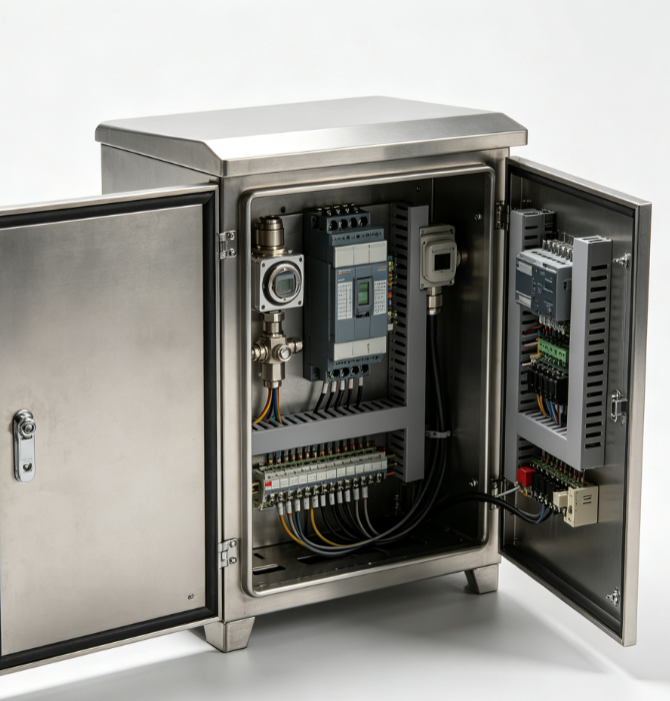
Table of Contents
Introduction
Pressure Sensors – The Eyes of the System
PLCs – The Brain Behind the Logic
Remote Access – Control from Anywhere
Integration and Communication Protocols
User Interface and Monitoring
Environmental Durability
Conclusion
Frequently Asked Questions (FAQ)
1. Introduction
Track lubrication controllers are the unsung heroes of railway infrastructure maintenance. They manage the precise application of lubricant to the wheel-rail interface, reducing wear, extending component life, and cutting energy consumption. But the technology behind them has evolved far beyond simple timers.
Modern controllers integrate pressure sensors for real-time feedback, PLCs for programmable logic, and remote access for cloud-based monitoring. Understanding these features is essential for specifying a system that delivers reliability and performance. This guide breaks down the key components, their functions, and what to look for when selecting a track lubrication controller.
2. Pressure Sensors – The Eyes of the System
Pressure sensors monitor the lubrication system's health and performance in real time. They provide the feedback that ensures lubricant is being delivered at the correct pressure and volume.
Why they matter. Without pressure monitoring, a controller cannot detect a clogged nozzle, a leaking line, or a pump failure. The sensor converts mechanical pressure into an electrical signal—typically a millivolt output that can be amplified into a standard 4-20mA or 0-10V signal for the PLC to interpret . This feedback loop enables the system to adjust on the fly and alert operators to issues before they cause equipment damage.
Key specifications to look for:
Pressure range – Must cover the expected operating pressure of your lubrication system (e.g., 0-100 bar for hydraulic systems).
Output type – Analog (4-20mA) or digital (I²C). Analog is more common for industrial control integration.
Material compatibility – The sensor's diaphragm and housing must be compatible with the lubricant and environmental conditions. Stainless steel 316L is standard for corrosive environments .
Temperature range – Check that the sensor can operate within the ambient and fluid temperature range of your application.
Real-world application. In a wayside lubrication system, a pressure sensor downstream of the pump confirms that lubricant is reaching the nozzles. If the pressure drops below a threshold, the controller can trigger an alarm, shut down the system, or switch to a backup pump. Without this feedback, a dry rail event could go undetected for days.
3. PLCs – The Brain Behind the Logic
The Programmable Logic Controller (PLC) is the core computing unit of the track lubrication controller. It executes the logic that determines when, how much, and where to apply lubricant.
What a PLC does. A PLC reads inputs from sensors and user settings, processes this information through a stored program, and then activates outputs to control pumps, valves, and other actuators . It replaces older relay-based systems with a flexible, reprogrammable digital solution.
Why a PLC matters for track lubrication. The PLC allows for complex control strategies that simple timers cannot match. It can:
Adjust lubrication timing based on train traffic patterns
Coordinate with wheel sensors to lubricate only when a train passes
Log data for maintenance analysis
Be reprogrammed in the field without hardware changes
Key specifications to look for:
Processing speed – Fast enough to handle the control cycle without lag.
I/O capacity – Sufficient digital and analog inputs/outputs for your sensor array and actuators.
Programming capability – Support for ladder logic or other industry-standard languages.
Expandability – Ability to add modules if the system grows.
Modern PLCs like those found in advanced controllers use Siemens or similar industrial-grade processors . They are built to withstand industrial environments and offer high reliability, making them the standard for wayside lubrication systems.
4. Remote Access – Control from Anywhere
Remote access transforms a local controller into a connected device that can be monitored, adjusted, and diagnosed from a central location. This is a game-changer for railway operators managing distributed infrastructure.
How remote access works. The controller connects to a network—typically via Ethernet—and uses protocols like OPC UA, PROFINET, or MODBUS TCP/IP to communicate with a central server or cloud platform . This allows operators to view system status, adjust parameters, and receive alerts from anywhere with an internet connection.
Why it matters for railway operators. Remote access reduces the need for site visits. Instead of dispatching a technician to check every wayside lubrication cabinet, an operator can review data from all locations on a single dashboard. The system can send real-time alerts for low lubricant levels, pump faults, or pressure drops. In the event of an issue, remote diagnostics can often identify the problem without a physical inspection.
Security and access control. Remote access must be secure. Look for controllers that support VPN connections, encrypted communication, and role-based access controls . Multi-factor authentication is increasingly becoming a standard best practice to prevent unauthorized access to critical infrastructure.
5. Integration and Communication Protocols
A controller is only as useful as its ability to communicate with other systems. Integration capabilities are a key differentiator between basic and advanced units.
Common protocols:
PROFINET – Industrial Ethernet standard for real-time data exchange
OPC UA – Platform-independent, secure communication for industrial automation
MODBUS TCP/IP – Widely used protocol for connecting industrial devices
S7 communication – Siemens-specific protocol for integration with PLC systems
What integration enables. With the right protocols, the lubrication controller can feed data into a central maintenance system, a cloud-based dashboard, or even an existing SCADA system. This eliminates data silos and enables predictive maintenance strategies.
Look for: A controller that offers open, standard protocols rather than proprietary ones. This ensures flexibility and avoids vendor lock-in.
6. User Interface and Monitoring
How you interact with the controller is just as important as what it does internally. A good user interface simplifies setup, monitoring, and troubleshooting.
Touchscreen displays. Advanced controllers like the SKF RWL-CC feature user-friendly touch displays (4 or 7 inches) for comprehensive monitoring and control of all critical parameters . This allows operators to view system status, adjust lubrication intervals, and review logs directly at the cabinet.
Status indicators. At a minimum, the controller should provide clear visual indicators for power, system status, alarms, and communication health.
Data logging. The ability to log data—lubrication events, pressures, alarms—is essential for trend analysis and predictive maintenance. Look for controllers with onboard storage or the ability to stream data to a central repository.
7. Environmental Durability
Track lubrication controllers are installed in challenging environments—exposed to temperature extremes, moisture, dust, and vibration.
Key durability specifications:
Operating temperature range – Check that the controller can operate in the expected ambient conditions. Standard units range from -5°C to +40°C; extended-range models may be available .
Protection class – Look for IP 5x or higher for dust protection . For outdoor or wash-down environments, consider higher IP ratings.
Enclosure material – Painted steel is common, but stainless steel (AISI 304) offers superior corrosion resistance for marine or chemically aggressive environments .
Mounting considerations. Ensure the enclosure is suitable for the intended mounting position (e.g., upright) and that cable entry points are adequately sealed to prevent water ingress .
8. Conclusion
Selecting a track lubrication controller requires a clear understanding of the key technologies that drive performance and reliability. Pressure sensors provide the real-time feedback that confirms lubricant delivery and alerts to faults. A PLC-based control system enables flexible, intelligent lubrication strategies. And remote access capabilities transform the controller from a local device into a connected asset that can be managed from anywhere.
When evaluating controllers, consider the integration protocols, the quality of the user interface, and the environmental durability of the enclosure. A well-specified controller will reduce maintenance costs, extend the life of rail and wheel components, and keep your operations running smoothly.
9. Frequently Asked Questions (FAQ)
Q: Why do I need pressure sensors in a lubrication controller?
A: Pressure sensors confirm that lubricant is actually being delivered. Without them, the controller can only assume the pump is running. Real-time pressure data enables fault detection, leak detection, and precise control of lubricant volume.
Q: What is the role of a PLC in a lubrication system?
A: The PLC executes the control logic—deciding when to lubricate, for how long, and based on what inputs (sensors, timers, train detection). It replaces older relay-based controls and offers far greater flexibility and intelligence.
Q: What remote access protocols should I look for?
A: Look for controllers that support standard industrial protocols like PROFINET, OPC UA, or MODBUS TCP/IP. These enable integration with SCADA systems, central maintenance dashboards, or cloud platforms.
Q: What is the difference between IP5x and IP6x ratings?
A: IP5x offers dust protection (no harmful deposits) but is not fully dust-tight. IP6x is fully dust-tight, and higher second digits indicate better water protection (e.g., IP67 for temporary immersion). For railway wayside applications, IP5x is often sufficient, but harsher environments may require IP6x.
Q: Can I upgrade an old lubrication controller with remote access?
A: In many cases, yes. If the controller has a digital interface, you can add a gateway device to enable remote connectivity. However, older controllers without PLCs may not offer the intelligence needed for meaningful remote monitoring, making a full upgrade a better long-term investment.