
September 23, 2026
Crane and Aerial Platform Safety – Why Inclinometers Are Mandatory Equipment
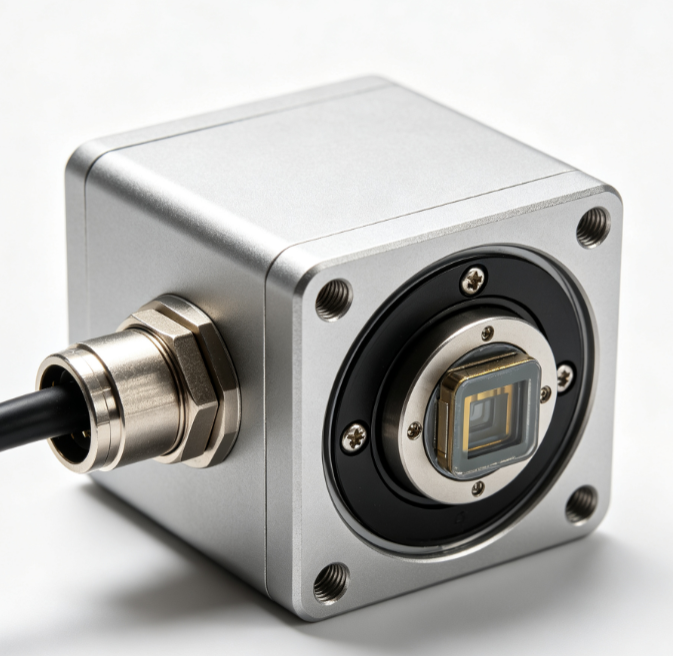
Table of Contents
Introduction
The Physics of Stability – Why Inclination Matters
Regulatory Mandates – The Global Shift
How Inclinometers Work – The Technology Behind the Safety
Functional Safety Standards – PLd and SIL CL2 Explained
Real-World Safety Functions – What the Inclinometer Actually Does
Conclusion
Frequently Asked Questions (FAQ)
1. Introduction
A crane or aerial platform is only safe when it's level. The moment the chassis tilts beyond a critical angle, the center of gravity shifts outside the stability envelope. The machine tips. People get hurt. Equipment is destroyed. It happens faster than anyone can react.
The inclinometer is the answer. It's a sensor that measures the device's angle relative to the earth's gravity vector . It provides the real-time data needed to prevent tipping before it happens. And increasingly, it's not an option—it's a legal requirement. This review examines why inclinometers have become mandatory equipment on cranes and aerial platforms, the technology behind them, and the safety standards that govern their use.
2. The Physics of Stability – Why Inclination Matters
The stability of a crane or aerial platform is a function of its center of gravity. When the machine is level, the center of gravity sits within the footprint of the stabilizers or wheels. As the machine tilts, the center of gravity shifts toward the lower side. If it crosses the tipping line, the machine overturns.
The limits are surprisingly tight. On a firefighting aerial platform, for example, the vehicle base is not allowed to tilt by more than ±3°, and the inclination of the personnel platform is limited to ±7° . These are small margins. Without active monitoring, the operator has no way of knowing when the machine is approaching its limit.
The inclinometer provides that margin of safety. It continuously measures the chassis inclination and, if it exceeds the maximum allowable slope, the machine's safety system disables lifting and travel functions, sets off alarms, and prevents the operator from continuing dangerous maneuvers .
3. Regulatory Mandates – The Global Shift
Inclinometers are no longer optional on modern lifting equipment. Multiple regulatory frameworks have made them mandatory.
North America – ANSI A92.20. The American National Standards Institute and the Canadian Standards Association have implemented the ANSI A92.20 standard for mobile elevated work platforms (MEWPs) . Under this standard, MEWPs must be equipped with tilt sensing systems that disable certain boom functions if the incline exceeds the slope limit . Previously optional, tilt sensing is now a requirement.
Europe – EN 280 and ISO 13849. European standards for aerial work platforms (EN 280) and mobile machines (ISO 13849) mandate inclination sensors for stability control. Machines must be equipped with sensors that meet specific performance levels—typically PLd under ISO 13849-1 .
Specific use cases. In Brazil, labor regulations (NR18) mandate that cranes must have specific safety items, including devices that prevent unsafe lifting angles . While not a global standard, it reflects the regulatory trend.
The driver. The regulations are harmonizing globally. The ANSI A92.20 standards incorporate ISO concepts, aligning North American requirements with Europe, Australia, and China . Manufacturers building for the global market must comply with the strictest standards.
4. How Inclinometers Work – The Technology Behind the Safety
Inclinometers measure angle using MEMS (Micro-Electro-Mechanical Systems) acceleration sensors. The sensor detects the acceleration due to gravity and calculates the tilt angle from that data .
The safety function. The inclinometer's safety function is to generate angle information. This data is sent to the machine's safety controller. If the tilt angle exceeds a critical value, the controller switches the machine to safe mode—disabling lifting, limiting boom extension, and activating alarms .
Redundancy and hybrid sensors. For safety-critical applications, single sensors are not enough. The MSSH hybrid inclination sensor from MOBA combines MEMS technology with a convection-based measuring principle for fail-safe angle measurements . This dual-technology approach protects against common-cause failures—where redundant MEMS sensors would be affected by the same external influence.
Environmental robustness. Inclinometers for cranes and aerial platforms must survive harsh conditions. The Baumer GIM600R, for example, is rated IP69K, corrosion-resistant up to CX, and immune to shocks, vibrations, dust, dirt, and salt spray . This is essential for equipment that operates in construction sites, ports, and other demanding environments.
5. Functional Safety Standards – PLd and SIL CL2 Explained
Not all inclinometers are created equal. Safety-critical applications require sensors that meet specific functional safety standards.
ISO 13849-1 PLd. The key standard for mobile machines is ISO 13849-1, which defines Performance Levels (PL) from PLa (lowest) to PLe (highest). For cranes and aerial platforms, PLd is the typical requirement . PLd means the sensor has high reliability, with diagnostic coverage and protection against systematic failures.
SIL CL2. Some inclinometers are certified to SIL CL2 under IEC 62061 . This is the equivalent safety integrity level for machinery applications. A PLd/ SIL CL2-certified sensor has demonstrated its ability to perform its safety function reliably.
Why it matters. Under the new ANSI standards, every safety function requires a sensor with the appropriate performance level . You cannot simply use any inclinometer—it must be certified to the required PL or SIL level.
6. Real-World Safety Functions – What the Inclinometer Actually Does
The inclinometer enables several critical safety functions that directly prevent accidents.
Tilt cutout. When the chassis exceeds the maximum safe slope, the tilt cutout disables boom lifting and extension. The operator cannot continue working until the machine is repositioned on level ground .
Travel disable. Many machines disable travel when the platform is raised and the chassis is on a slope. This prevents the operator from driving the machine into a position where it cannot safely recover .
Load moment limitation. The inclinometer works with other sensors—boom angle, boom length, and load cell data—to calculate the safe load moment. If the combination of load and reach exceeds the stability limit, the system cuts power to lifting functions .
Platform leveling. On aerial platforms, the platform must remain level regardless of chassis inclination. Inclinometers on the platform provide the feedback needed to keep the platform horizontal—a fundamental safety requirement for personnel .
7. Conclusion
Inclinometers have become mandatory on cranes and aerial platforms because they solve a fundamental problem: the operator cannot see the center of gravity. They cannot feel the chassis tilt until it's too late. The inclinometer provides the data that prevents tipping before it happens.
The regulatory landscape has shifted. ANSI A92.20, EN 280, and ISO 13849 all require inclination sensing for stability control. And the sensors themselves have evolved to meet these demanding standards—redundant architectures, hybrid sensing technologies, and rugged designs for harsh environments.
For equipment manufacturers, the message is clear: inclinometers are not optional. For operators, they are the difference between a safe day and a catastrophic failure.
8. Frequently Asked Questions (FAQ)
Q: What is an inclinometer?
A: An inclinometer is a sensor that measures the angle of a device with respect to the earth's gravity vector . It provides real-time tilt data to the machine's safety controller.
Q: Why are inclinometers mandatory on cranes and aerial platforms?
A: Regulatory standards—ANSI A92.20, EN 280, and ISO 13849—require tilt sensing for stability control. Under the new ANSI standards, tilt cutout is mandatory when the MEWP is on a slope greater than the manufacturer's specified limit .
Q: What is the difference between a tilt switch and an inclinometer?
A: A tilt switch is a simple on/off alarm triggered at a specific angle. An inclinometer provides continuous angle data, enabling more complex safety functions like load moment limitation and platform leveling .
Q: What safety standards apply to inclinometers for cranes?
A: ISO 13849-1 (Performance Level d) and IEC 62061 (SIL CL2) are the key functional safety standards . Sensors must be certified to these standards to be used in safety-critical applications.
Q: Can I retrofit an inclinometer to an older crane?
A: In many cases, yes. Retrofitting older equipment with inclinometers and safety controllers is becoming common as regulations tighten. However, the specific integration depends on the machine's control system and the sensor's compatibility.
Q: How often should inclinometers be tested?
A: On many aerial platforms, the manufacturer recommends a functional check at least once a year, using shims of specified thickness to simulate tilt and verify the alarm and cutout functions .